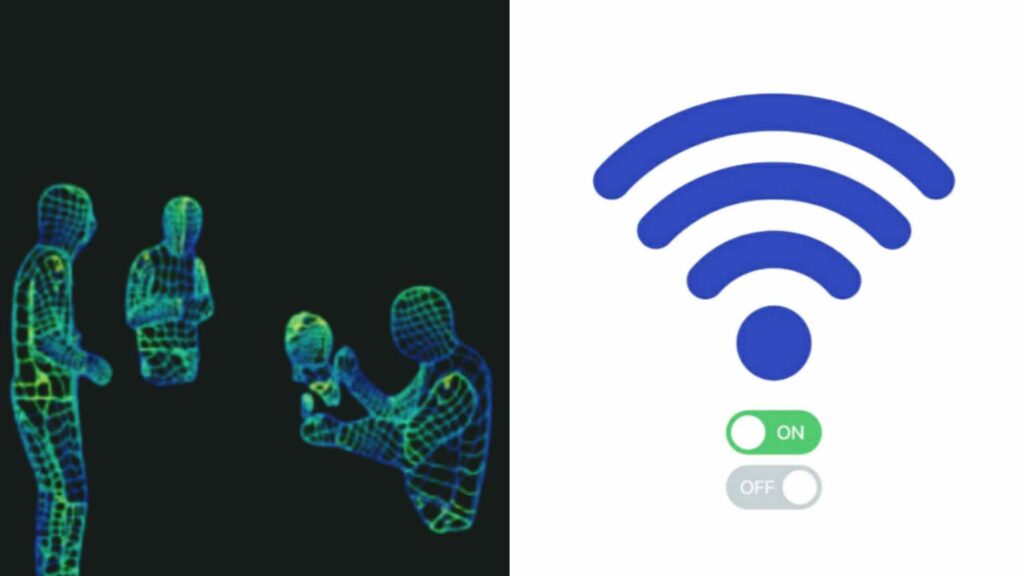
What if the router sitting in the corner of your living room did more than just stream movies and load webpages? What if it could actually see you?
That is the reality of a new open-source edge AI system called RuView. This technology transforms an ordinary WiFi router into a powerful tracker capable of detecting human body poses, vital signs, and movement patterns—all without a single camera in sight.
RuView builds on groundbreaking research originally developed by scientists at Carnegie Mellon University. Their work, known as DensePose from WiFi, proved that radio waves could be used for “device-free” sensing. Now, with RuView, this once-niche technology is becoming accessible to anyone.
So how does it work? The system taps into something called WiFi Channel State Information (CSI). Essentially, it analyzes how WiFi waves scatter when they bounce off human bodies. By placing four to six tiny, inexpensive WiFi chips around a room, the system creates an invisible web of radio waves.
A high-speed AI program then processes these signals at an astonishing rate—54,000 times per second. It is so precise that it can map out 17 distinct points on a person’s body, reconstructing a real-time digital stick figure showing the position of your head, elbows, and knees, even if you are on the other side of a wall.
The Dark Side of Invisible Sensing
While the technology is impressive, it raises alarming questions about privacy and security.
Unlike cameras, which are visible and often subject to strict regulations, passive WiFi sensing is completely invisible. It operates in the background without any physical clues that monitoring is taking place. Darkness offers no protection. Walls offer no protection. If someone can access your WiFi network, they could potentially keep an eye on your activity and presence without you ever knowing.
Legal experts point out that current privacy frameworks, including Europe’s General Data Protection Regulation (GDPR), are ill-equipped to handle this kind of surveillance. Passive sensing makes obtaining consent nearly impossible, effectively bypassing one of the core pillars of modern privacy law.
Even network encryption protocols like WPA3, designed to keep your internet traffic secure, are powerless to stop it. Because the tracking happens at the physical layer—the way radio waves move through space—encryption simply does not apply.
It is a profound shift. When devices built for communication suddenly become sensors and trackers, the entire landscape of personal privacy changes overnight. The question is no longer whether someone is watching, but whether your own WiFi router is doing it for them.
About the Author