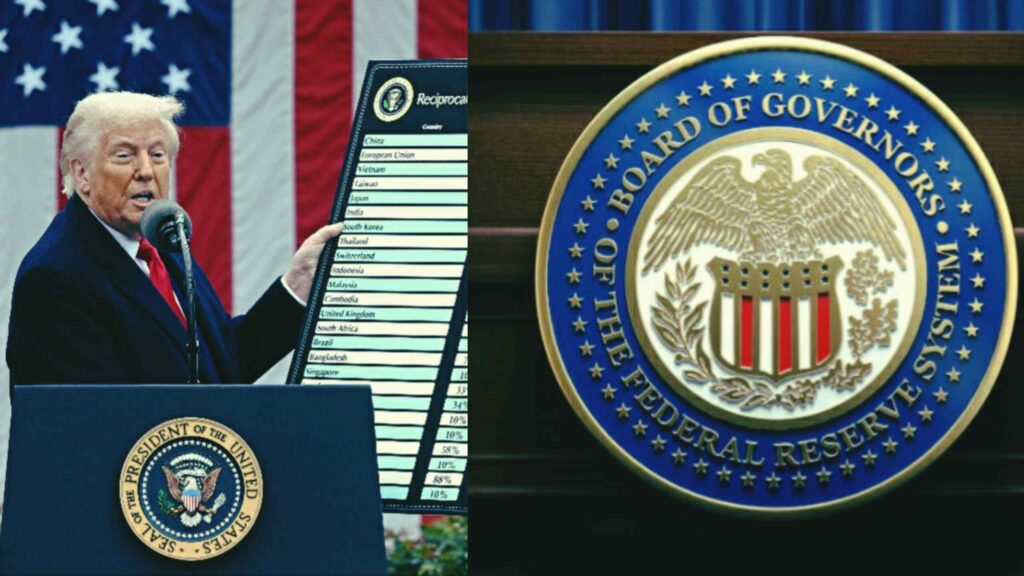
A recent Supreme Court decision striking down a broad swath of the Trump administration’s tariffs has injected a new layer of complexity into the Federal Reserve’s already delicate economic calculus. Policymakers, who had only just begun to feel confident that tariff-driven price pressures would soon ease, are now grappling with a renewed fog of uncertainty.
At issue is not just whether the tariffs will stay gone—but what comes next. If companies that paid the now-invalidated duties are entitled to refunds, the disruption could ripple through supply chains and business models. Atlanta Fed President Raphael Bostic, speaking in Birmingham, Alabama, laid out the central questions keeping officials up at night.
“Is there a requirement to pay back the firms that have paid in? If so, that’s a lot of disruption,” Bostic said. “Does this cause businesses to revert back to old business models about where they are getting their supplies? Will there be another vehicle to put all those tariffs in at the same level, or are there constraints?”
The ruling has already left its mark on financial markets. Interest rate futures seesawed Friday as traders weighed whether the Fed would resume rate cuts in June or hold off until July—a reflection of the fresh complications now baked into the outlook.
For businesses, the path forward is just as murky. Some may pause planned price hikes, potentially easing inflation. Others may delay hiring or investment, mirroring the caution that defined much of last year. Treasury Secretary Scott Bessent acknowledged the legal uncertainty could stretch on, predicting the fight over refunds might take “weeks, months, years” to resolve.
In the meantime, the administration is already moving to fill the gap. Bessent said alternative import levies would be imposed under what he described as well-tested authorities. President Trump, responding sharply to the ruling, announced an immediate 10 percent tariff on imports from all countries—on top of any existing duties.
St. Louis Fed President Alberto Musalem indicated that if the new tariffs are essentially a one-for-one replacement of the old ones, his economic forecast wouldn’t shift dramatically. Still, he plans to hear directly from CEOs on how they intend to navigate the transition.
“It is possible that as companies begin to think of how they’re going to transition from paying IEEPA tariffs to paying a different kind of tariffs, that could introduce a period of uncertainty there for companies,” Musalem said.
Dallas Fed President Lorie Logan echoed the sentiment, acknowledging the ruling adds another layer of ambiguity. “It’s something we’ll be paying attention to, but I don’t have any specific perspective,” she said in New York.
For the Fed, the takeaway is clear: just as the tariff picture seemed to be coming into focus, the ground has shifted again.
About the Author