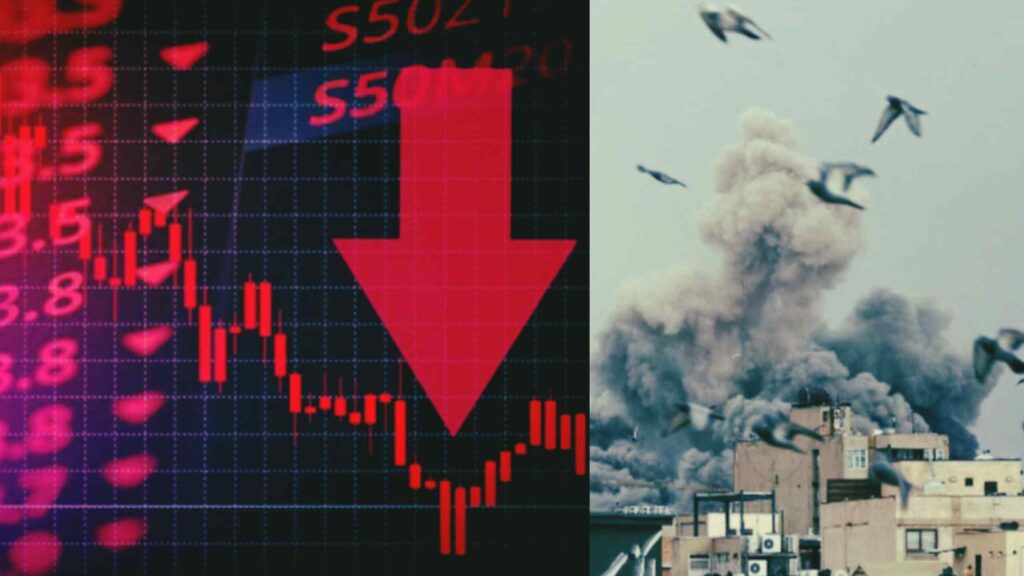
Global stock markets are in freefall and oil prices have skyrocketed past $100 a barrel as the intensifying military conflict between US-Israeli forces and Iran sparks fears of a sustained shutdown in the Strait of Hormuz, a critical artery for the world’s energy supplies.
The crisis deepened over the weekend as the US and Israel launched fresh airstrikes across Iran, targeting multiple sites including oil depots. In a move that signals hardliners are tightening their grip on the country, Iran on Sunday named Mojtaba Khamenei to succeed his father Ali Khamenei as Supreme Leader, just one week into the war.
The disruption to energy shipments through the Strait of Hormuz—through which roughly one-fifth of the world’s oil typically passes—has brought markets to a boil. By Monday morning in Asia, Brent crude had jumped nearly 24% to $114.74 a barrel, while Nymex light sweet crude climbed more than 26% to $114.78.
The ripple effects were immediate and severe across Asia-Pacific markets. Japan’s Nikkei 225 plunged more than 7%, Hong Kong’s Hang Seng shed over 3%, and Australia’s ASX 200 dropped more than 4%. South Korea’s Kospi index took an especially hard hit, sliding more than 8% and triggering a 20-minute trading halt—a circuit breaker designed to curb panic selling. It was the second time in a week the mechanism had been activated, following a 12% slump on Wednesday.
Trading screens lit up early Monday as oil prices shot up 10% in roughly a minute, then another 10% within 15 minutes. Just last week, markets had remained surprisingly calm despite the looming threat to millions of barrels of crude and liquefied natural gas trapped in the Gulf. But weekend escalations, coupled with images of destroyed energy infrastructure on both sides of the waterway, have sent investors scrambling.
The big question now is how high prices will climb. Some analysts warn that if the Strait of Hormuz remains effectively closed through the end of March, oil could shatter records, surpassing $150 a barrel. Beyond crude, the ripple effects would drive up costs for derivatives like jet fuel and essential fertilizer components.
While Gulf energy supplies are primarily consumed in Asia, the shockwaves are already being felt further afield. Asian buyers are aggressively bidding up US gas, forcing some tankers originally bound for Europe to turn back in the mid-Atlantic.
US President Donald Trump downplayed the immediate market turmoil, calling short-term price spikes a “small price to pay” for neutralizing Iran’s nuclear threat. Meanwhile, his energy secretary sought to clarify that Israel—not the US—is responsible for targeting Iran’s energy infrastructure, as concerns mount over rising domestic fuel prices.
About the Author