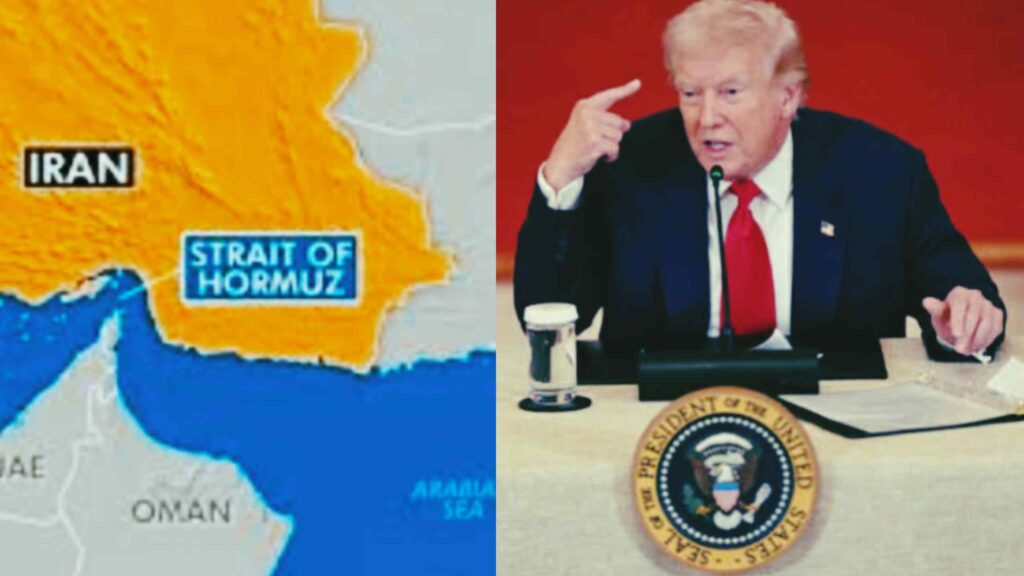
Oil markets took a sharp downturn on Tuesday following a blunt social media warning from US President Donald Trump directed at Iran, threatening severe retaliation if the nation disrupts a vital passageway for global energy supplies.
In a post on his social media platform, Trump made his position unmistakably clear. “If Iran does anything that stops the flow of Oil within the Strait of Hormuz, they will be hit by the United States of America TWENTY TIMES HARDER than they have been hit thus far,” he declared.
The impact was immediate. By late morning in Asia, Brent crude had tumbled 6.5%, settling at $92.46 a barrel, while Nymex Light Sweet crude dropped 7% to $88.15.
Just a day earlier, prices had skyrocketed to nearly $120 a barrel amid mounting fears that the ongoing conflict between US-Israeli forces and Iran could spiral into a prolonged disruption of Middle Eastern oil supplies. However, Trump’s latest remarks, which included suggestions that the war might be drawing to a close, helped reverse some of those dramatic gains.
“We took a little excursion because we felt we had to do that to get rid of some evil. Then, I think you’ll see it’s going to be a short-term excursion,” Trump told reporters during a news conference in Florida.
Markets Catch Their Breath, But Volatility Looms
The sudden drop in prices has offered traders a brief moment of relief, but experts caution that the energy markets are far from stable. Alberto Bellorin, an analyst at oil and gas investment firm InterCapital Energy, described the current environment as a “total tug-of-war.” He noted that oil trading will “remain incredibly twitchy” for the foreseeable future, with prices poised to spike on any escalation of the conflict and fall just as quickly if tensions appear to ease.
Asian stock markets mirrored this cautious optimism, rebounding after Monday’s heavy losses. Japan’s Nikkei 225 climbed 2.7%, Hong Kong’s Hang Seng rose 2%, and South Korea’s Kospi surged an impressive 5.5%. The previous day’s sell-off had been driven by investor fears that instability in the Gulf would fuel inflation and force interest rates higher.
Why the Strait of Hormuz Matters
At the heart of the turmoil lies the Strait of Hormuz, a narrow waterway through which roughly one-fifth of the world’s oil passes. Any threat to this chokepoint sends immediate shockwaves through global energy markets.
Despite Tuesday’s pullback, prices remain significantly elevated. Park Kee Hyun, an analyst at the S. Rajaratnam School of International Studies, pointed out that oil is still trading about 20% higher than before the US and Israel launched airstrikes on Iran just over a week ago. He warned that prices will stay “volatile” as shipping companies continue to charge risk premiums to account for the possibility of further escalation.
Park also added a note of caution about Trump’s comments. While the president’s words may signal that the end of the war could be near, the bigger question is whether those remarks will be followed by real, concrete changes on the ground.
International Response
On the diplomatic front, G7 nations issued a joint statement on Monday expressing readiness to take “necessary measures” to address global energy supply concerns in light of surging oil prices. A subsequent meeting between G7 leaders and the International Energy Agency (IEA) stopped short of a final decision on releasing oil from strategic stockpiles, though the option remains on the table.
UK Chancellor Rachel Reeves confirmed that Britain used the meeting to push for “immediate de-escalation” in the Middle East and to guarantee security for vessels operating in the region. “I stand ready to support a co-ordinated release of collective IEA oil reserves,” she said, signalling that major economies are prepared to act if the situation deteriorates further.
About the Author