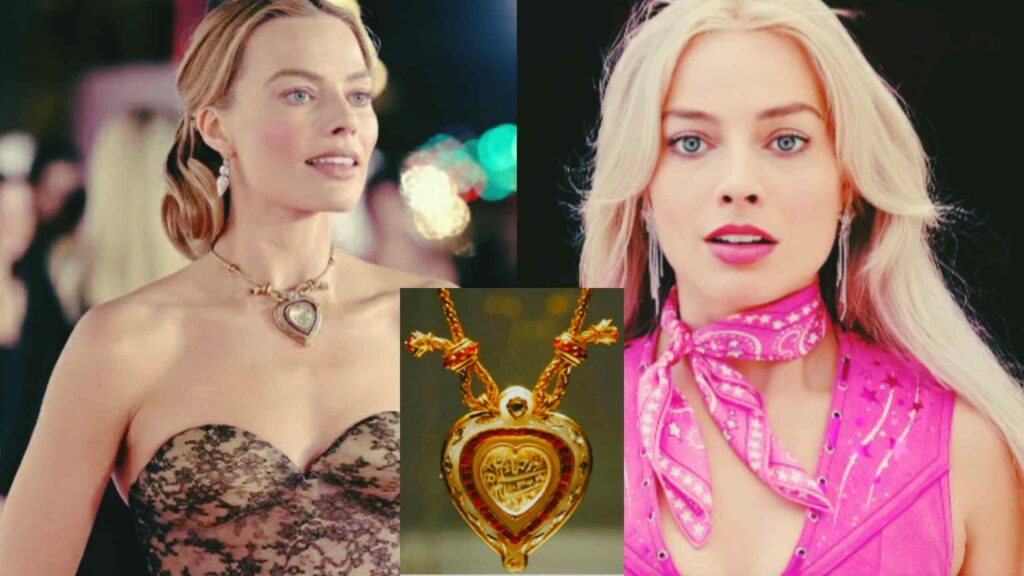
At the January 28th premiere of Wuthering Heights, Margot Robbie’s fashion statement became a focal point of cultural conversation. While her Schiaparelli haute couture gown celebrated classic Hollywood elegance, it was her extraordinary jewelry selection that sparked a wider debate about history and ownership.
Robbie chose to wear the famed Taj Mahal diamond necklace, a piece valued at approximately $8 million. Originally a Mughal-era heirloom from 17th-century India, the heart-shaped diamond is inscribed with a message of eternal love and the name of Empress Nur Jahan. It is believed to have passed through the court of Shah Jahan, the emperor who built the iconic Taj Mahal monument.
The diamond’s modern journey saw it redesigned by Cartier in the 1970s into an elaborate necklace featuring rubies, jade, and gold tassels. It entered Hollywood lore when Richard Burton gifted it to Elizabeth Taylor for her 40th birthday. Robbie, styling it as Taylor famously did, explained her choice was inspired by the piece’s romantic history.
However, the necklace’s appearance reopened complex questions. While many admired the homage to Old Hollywood glamour, a significant number of observers, particularly from India, questioned the narrative. Critics argued that identifying the jewel primarily with Taylor risks overshadowing its deep Mughal origins and the context of how such artifacts entered Western collections.
Social media discussions quickly expanded beyond the red carpet, touching on themes of cultural heritage, colonial history, and the ongoing efforts to reclaim artifacts taken from their countries of origin. The moment highlighted the tension that can arise when a symbol of one culture’s history is presented on a global stage as a luxury fashion item, prompting reflection on how such historically significant objects are framed and understood.
About the Author