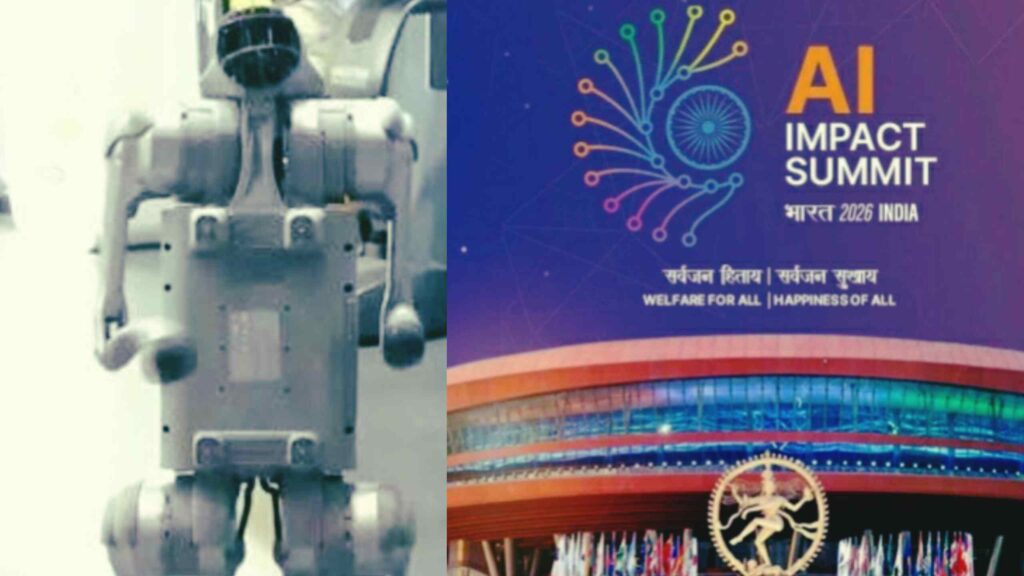
An Indian university found itself at the center of controversy at a major AI summit in Delhi this week, after an official suggested that a Chinese-made robotic dog was actually its own invention.
The incident unfolded when a professor from Galgotias University appeared on state-run DD News and claimed that a robot named “Orion” had been “developed” at the institution’s Centre of Excellence. A video of her remarks quickly went viral—along with sharp pushback from online users who recognized the machine as the Go2 model from Chinese robotics firm Unitree Robotics. The device is commercially available for around 200,000 rupees ($2,200; £1,600).
In a statement issued Wednesday, the university pushed back against the backlash, denying it had ever claimed to have built the robot and dismissing the criticism as a “propaganda campaign.”
“We would like to clearly state that the robotic programming is part of our endeavour to make students learn AI programming and develop and deploy real world skills using globally available tools and resources,” the university explained, adding that developing AI talent remains a key priority.
The professor in the video, Neha Singh, later told reporters her comments had been misinterpreted. “It might be that I could not convey well what I wanted to say, or you could not understand well what I wanted to say,” she said.
Social media users, however, remained unconvinced, accusing the university of dishonesty.
Following the backlash, reports emerged that the university had been asked to vacate its stall at the summit. Faculty members said they had received no official notice to do so, but news agency Press Trust of India later reported that electricity to the stall had been cut off amid the controversy.
The incident has proven awkward for summit organizers—especially since the video had briefly been shared on the official X account of IT Minister Ashwini Vaishnaw before being deleted.
India’s IT Secretary S. Krishnan urged that the episode not overshadow the efforts of other participants. “What happened should not affect the way people present or exhibit their work at such events. The idea is not to use an opportunity like this to become something else or create unnecessary noise,” he told reporters, stressing the importance of following a proper code of conduct.
The India AI Impact Summit, inaugurated by Prime Minister Narendra Modi on Monday, is being promoted as a flagship event aimed at positioning India as a global AI hub. Delegates from more than 100 countries, including several heads of government, are in attendance alongside industry leaders such as Google’s Sundar Pichai.
The five-day gathering features policy discussions, startup showcases, and closed-door meetings on AI governance and innovation. But its opening day was also marred by complaints of overcrowding, long queues, and confusion at the venue—prompting organizers to extend exhibition hours and tighten entry protocols. They say conditions have since improved.
About the Author