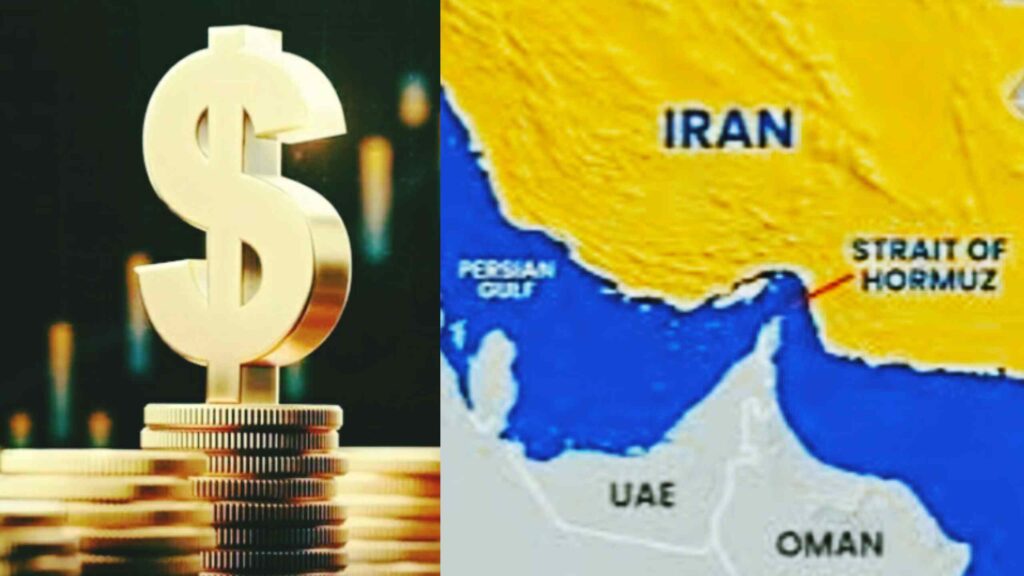
The U.S. dollar hovered close to recent highs on Tuesday, as global markets braced for a high-stakes deadline tied to Iran and the critical Strait of Hormuz, a key artery for global oil shipments.
Investors remained on edge ahead of a U.S.-imposed cutoff for Tehran to reopen the strait or risk potential strikes on its infrastructure. The escalating Middle East conflict has already pushed energy prices sharply higher, reinforcing demand for the dollar as a safe-haven currency, particularly across Asian markets.
Despite a slight pause in momentum—driven by faint hopes of a diplomatic breakthrough over the Easter holiday—traders largely avoided selling dollars, reflecting deep uncertainty ahead of the 8 p.m. Eastern Time (midnight GMT) deadline announced by U.S. President Donald Trump.
Safe-Haven Demand Keeps Dollar Elevated
Currency markets showed limited movement but sustained pressure:
The Japanese yen weakened to 159.79 per dollar, lingering near levels that previously triggered intervention in 2024.
The euro traded at $1.1533, while the British pound hovered at $1.3227—both staying just above recent multi-month lows.
Market participants remain heavily positioned in favor of the dollar, anticipating further geopolitical escalation.
Brent Donnelly, president of Spectra Markets, said the dollar’s upside remains capped despite strong positioning:
“Markets are long on the dollar in case tensions escalate, but resilience in stocks, gold, and the Chinese yuan is limiting further gains. For now, traders are waiting for clarity once the deadline passes.”
Escalation Risks Drive Volatility
Tensions intensified after President Trump warned Iran could be “taken out” within a single night, signaling potential strikes on key infrastructure such as power plants and bridges.
In response, Iran and Israel exchanged fresh attacks on Tuesday after Tehran refused to reopen the Strait of Hormuz. Israeli forces reported targeting Iranian government infrastructure, while regional defenses intercepted Iranian missiles over Israel and Saudi Arabia.
The ongoing standoff has heightened fears of prolonged disruption to global energy supplies—keeping financial markets firmly risk-averse.
Emerging Market Currencies Under Pressure
Risk-sensitive currencies showed mixed performance:
The Australian dollar eased to $0.6917, while the New Zealand dollar slipped to $0.57 after recent recovery attempts.
The South Korean won remained weak beyond the 1,500 level—historically associated with financial crises.
Indonesia’s rupiah hit a record low.
China’s yuan held relatively steady after stabilizing in March.
Analysts at Commonwealth Bank of Australia noted that while short-term optimism about a potential resolution could slightly weaken the dollar, the broader outlook hinges on one critical factor:
“The global economic impact depends on whether the Strait of Hormuz reopens. Even if the U.S. steps back, the situation remains unresolved unless shipping routes are restored.”
Outlook: All Eyes on Deadline
With geopolitical risks dominating sentiment, markets are entering a wait-and-see phase. The outcome of the U.S. deadline—and any military or diplomatic developments that follow—will likely set the tone for currencies, commodities, and global risk appetite in the days ahead.
For now, the dollar remains firmly supported, reflecting the market’s cautious stance amid one of the most volatile geopolitical backdrops in recent years.
About the Author