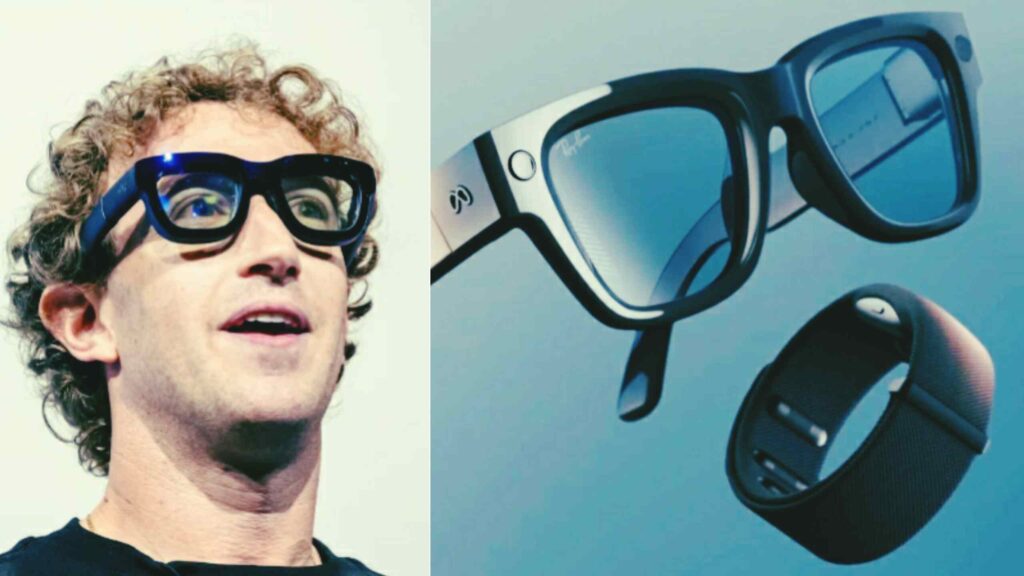
Meta is getting ready to release two new Ray-Ban smart glasses models aimed specifically at people who need prescription lenses, according to a Bloomberg report from Thursday. Codenamed Scriber and Blazer, the models first appeared in Federal Communications Commission filings and could reach customers as soon as next week. Rather than representing a new generation of hardware, they signal something potentially more significant: a shift in distribution strategy.
Prescription eyewear makes up roughly 69% of the global eyewear market, which is valued at $223 billion. Meta sold over seven million Ray-Ban and Oakley AI frames in 2025—an impressive figure for a product category that barely existed three years ago, yet still a small fraction compared to the estimated 1.5 billion people worldwide who wear corrective lenses. With these new models, Meta is making its clearest move yet to transition smart glasses from a consumer electronics novelty to a staple of mainstream optical retail, where the customer base, profit margins, and overall scale are far greater.
What the New Models Offer—and What They Don’t
Scriber and Blazer are AI glasses without built-in displays, offering capabilities similar to the current Ray-Ban Meta line: a camera, microphone, speakers, and Meta AI integration, but no screen. Blazer will be available in both regular and large sizes, while Scriber appears to come in a single size. Both models feature Wi-Fi 6 UNII-4 band support—an upgrade over existing versions—and will include charging cases.
This distinction matters because Meta already sells a version with a display. The Ray-Ban Meta Display, launched at Connect 2025, features a full-color heads-up display, a 12-megapixel camera with 3x zoom, and pairs with a neural wristband that reads muscle signals for navigation. It retails for $799. Meanwhile, Orion—Meta’s full augmented reality prototype with holographic displays—remains a research project without a confirmed consumer release.
Scriber and Blazer sit below both options in the product lineup. Their goal isn’t to showcase cutting-edge technology but to integrate Meta AI into the frames people already need to purchase. The thinking behind this approach is simple: if someone requires prescription lenses and is already planning to spend several hundred dollars at an optician, the added cost of making those lenses “smart” becomes much more manageable. Mark Zuckerberg made this strategy clear on a recent earnings call, noting that “billions of people wear glasses or contacts for vision correction” and suggesting it’s “hard to imagine a world in several years where most glasses that people wear aren’t AI glasses.”
The EssilorLuxottica Factor
This prescription-focused pivot also brings Meta’s most complex hardware partnership into sharper focus. EssilorLuxottica—the Franco-Italian conglomerate behind Ray-Ban, Oakley, LensCrafters, and Sunglass Hut—manufactures all of Meta’s smart glasses and controls the optical retail channels where the new models will be sold. While the partnership has yielded results, it has also faced tensions.
Bloomberg reported in February that the two companies have been working through disagreements over pricing and strategy. EssilorLuxottica’s adjusted gross margin dropped 2.6 percentage points in 2025 to 60.9%, partly due to the higher component costs associated with smart glasses compared to traditional frames. Meta pushed for Black Friday discounts in 2023, but EssilorLuxottica—protective of its luxury brand image—declined. The friction stems from differing priorities: Meta wants to drive adoption and lock users into its AI ecosystem, while EssilorLuxottica aims to protect margins on a product line that is squeezing them.
Prescription models could help bridge this divide. Prescription lenses command higher retail prices and healthier margins than non-prescription sunglasses. The coatings, custom grinding, and fitting appointments involved in prescription orders generate extra revenue at every stage of the supply chain. If smart glasses gain traction in the prescription channel at scale, the economics improve for EssilorLuxottica even as volumes grow for Meta. The companies are reportedly considering doubling their combined production target to 20 million units per year, up from an estimated 10 million capacity by the end of 2026.
The Challenges of Selling Through Opticians
Bringing smart glasses into optical retail introduces complications that traditional consumer electronics channels don’t face. Opticians are trained to fit lenses, not to explain AI assistants, camera privacy settings, or software updates. The customer experience at a LensCrafters is fundamentally different from that at a Meta Store or Apple Store, and the training, support, and returns handling required for a connected device are far more complex than for a standard pair of Wayfarers.
There’s also legal risk to consider. Solos Technology filed a patent infringement lawsuit against Meta and EssilorLuxottica in January 2026, claiming that the Ray-Ban Meta line violates several patents related to core smart eyewear technology and seeking “multiple billions of dollars” in damages. This legal battle adds another layer of uncertainty—on top of partnership tensions and margin pressures—to a product line Meta is counting on as the foundation of its wearable AI strategy.
Consumers will ultimately choose connected frames only if they see value in them, especially since regular glasses are often cheaper, lighter, and come without privacy concerns. Meta is betting that AI functionality—specifically the ability to ask questions, get real-time information, and interact with digital services without reaching for a phone—will prove compelling enough to overcome these reservations.
Scriber and Blazer aren’t the product that will definitively test that bet. Instead, they’re the product designed to place Meta’s AI into opticians’ fitting trays, onto the faces of people already in the market for new glasses, and into a distribution channel that reaches billions of potential customers. The technology itself is incremental. The strategic ambition behind it is anything but.
About the Author