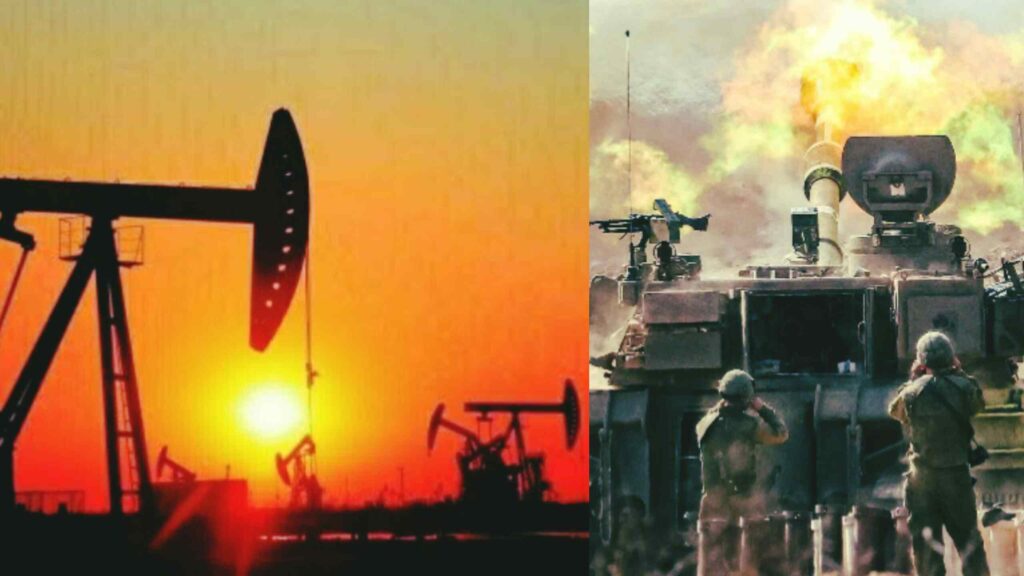
Oil prices climbed more than $1 per barrel on Thursday, recovering losses from the previous session as concerns mounted that ongoing hostilities in the Middle East could further disrupt global energy supplies.
Brent crude futures rose $1.65, or 1.61%, to $103.87 a barrel by early trading, while U.S. West Texas Intermediate crude gained $1.49, or 1.65%, reaching $91.81 per barrel.
The price jump came amid fading hopes for a ceasefire. Iran’s foreign minister indicated on Wednesday that while the country is still reviewing a U.S. proposal aimed at ending the war, it has no intention of engaging in talks to resolve the broader Middle East conflict. Meanwhile, the White House warned that President Donald Trump would intensify pressure on Iran if it fails to acknowledge what the administration calls a military defeat.
“Optimism regarding a ceasefire has faded,” said Tsuyoshi Ueno, senior economist at NLI Research Institute. He noted that Washington’s demands appear steep, leaving oil markets vulnerable to further swings depending on how negotiations and military actions unfold.
According to three Israeli cabinet sources familiar with the matter, the 15-point U.S. proposal—delivered through Pakistan—calls for Iran to eliminate its stockpiles of highly enriched uranium, halt enrichment activities, curb its ballistic missile program, and cut off funding for regional allies.
The conflict has effectively halted shipments through the Strait of Hormuz, a critical waterway that typically handles roughly one-fifth of the world’s crude oil and liquefied natural gas supply. The International Energy Agency has described the disruption as the largest in history.
In response to the growing uncertainty, Japanese Prime Minister Sanae Takaichi requested additional coordinated releases from oil stockpiles during talks with IEA chief Fatih Birol on Wednesday, as Tokyo seeks to shield itself from a prolonged conflict.
Supply concerns were further compounded by disruptions elsewhere. In Russia, at least 40% of oil export capacity has been sidelined due to Ukrainian drone strikes, a disputed attack on a major pipeline, and the seizure of tankers. Meanwhile, Iraqi oil production has fallen sharply, with storage tanks reaching critical levels, according to three Iraqi energy officials.
These supply-side pressures emerged even as U.S. crude inventories posted a larger-than-expected build. Stockpiles rose by 6.9 million barrels to 456.2 million barrels in the week ending March 20, marking the highest level since June 2024 and far surpassing analyst forecasts for a modest 477,000-barrel increase.
About the Author