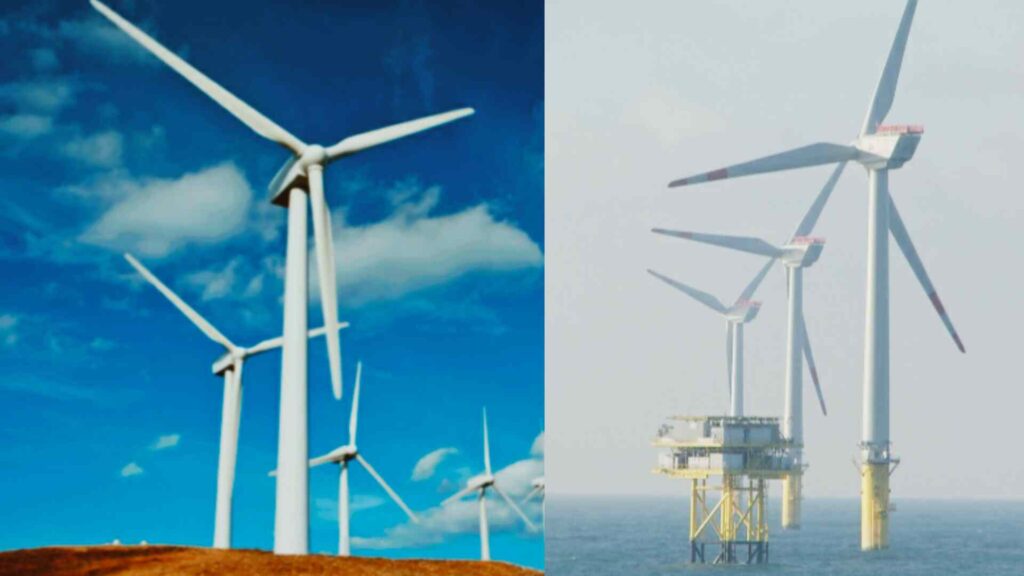
European leaders are set to sign a landmark pact on Monday, committing to jointly develop 100 gigawatts of offshore wind power through large-scale cross-border projects. The agreement, to be signed at the North Sea Summit in Hamburg, comes amid heightened geopolitical tensions and growing global criticism of renewable energy transitions.
Strengthening Energy Sovereignty Through Collaboration
The pact, which includes Britain, Germany, Denmark, Belgium, France, the Netherlands, Norway, Ireland, Iceland, and Luxembourg, represents a significant step toward the broader 2050 goal of 300 GW of offshore wind capacity set after Russia’s invasion of Ukraine.
“This is about securing our energy independence and moving beyond the volatility of fossil fuels,” stated British Energy Minister Ed Miliband. German Economy Minister Katherina Reiche added, “Planning and building this infrastructure together across borders strengthens our industrial base and Europe’s strategic sovereignty.”
Britain also announced it will sign supplementary agreements to streamline the development of multinational wind farms and shared grid connections.
Record Growth in Renewable Energy
This political commitment builds on substantial recent progress. In January, Britain secured a record 8.4 GW of new offshore wind capacity in its latest auction. More broadly, 2025 marked a historic milestone for the EU: for the first time, wind and solar collectively generated more electricity than fossil fuels, accounting for 30% of the bloc’s power mix.
Solar power was a standout, growing over 20% for the fourth consecutive year and surpassing both coal and hydroelectric generation. Analysts emphasize that this structural shift is now accelerating Europe’s decoupling from fossil fuel dependencies.
The summit signals a unified European resolve to advance clean energy infrastructure, framing it as an essential pillar of future economic stability and national security.
About the Author