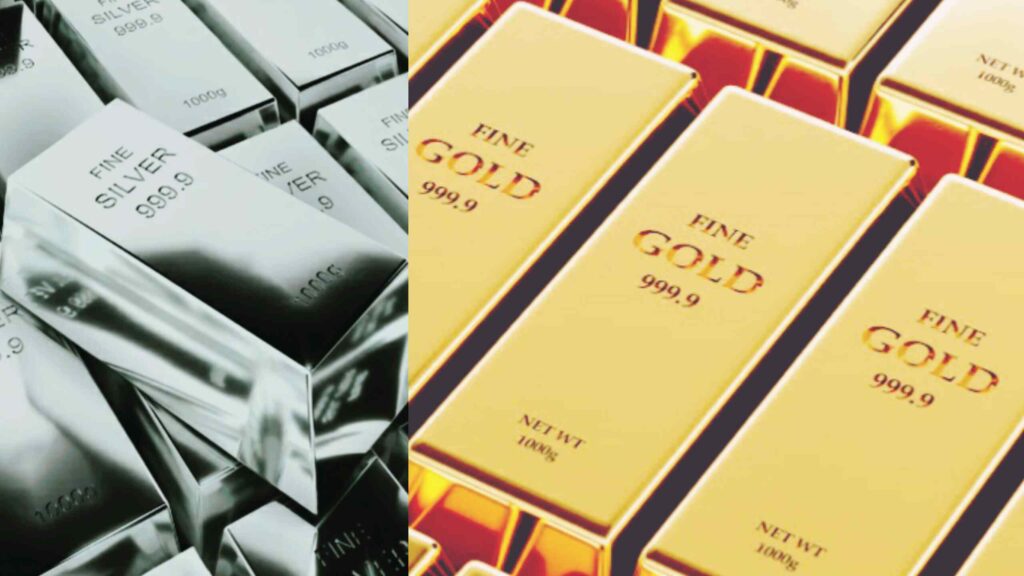
NEW YORK* — Gold and silver prices staged a significant recovery on Tuesday, rebounding from a historic multi-day sell-off that analysts attributed primarily to a short-term positioning reset rather than a breakdown in their core investment themes.
The precious metals complex suffered one of its most severe declines in decades late last week. Gold plunged nearly 10% on Friday, its steepest single-day drop in years, while silver collapsed roughly 30% in a session—its worst since 1980. Both metals extended losses on Monday before reversing course sharply on Tuesday.
- Spot gold surged as much as 4% during the day, last trading over 2% higher.
- Silver outpaced gold in its bounce, with spot prices jumping up to 7.8% and futures gaining 7%.
The violent price action forced a market reassessment: was this the start of a sustained downturn or an overreaction to transient factors?
Analysts Point to Temporary Catalysts, Intact Fundamentals
Major banks concluded the sell-off was exaggerated. Deutsche Bank strategists noted that while speculative activity had been elevated, it alone couldn’t justify the scale of the plunge. They identified the triggers as a confluence of short-term events: a stronger U.S. dollar, shifting expectations for Federal Reserve leadership, and pre-weekend position trimming.
“The adjustment in precious metal prices overshot the significance of its ostensible catalysts,” Deutsche Bank stated, adding that the broader investment rationale for holders “has not likely changed for the worse.”
Both Deutsche Bank and Barclays emphasized that the foundational drivers for gold—including geopolitical uncertainty, policy unpredictability, and central bank reserve diversification—remain firmly positive. Barclays acknowledged “overheated technicals” but expects the underlying demand for gold to stay resilient.
Silver’s Wild Ride: Speculation Meets Structural Deficit
Silver’s more dramatic volatility highlights its status as a smaller, less liquid market with heavier retail investor participation, making it prone to sharp sentiment swings.
However, analysts caution against dismissing the move as pure speculation. A strong structural bullish case underpins silver, rooted in booming industrial demand. A key January study projected that annual global silver demand could reach 48,000–54,000 tonnes by 2030, vastly outstripping expected supply of about 34,000 tonnes.
The solar photovoltaic sector is a primary driver, forecast to consume up to 41% of global supply annually this decade. Demand from other technological frontiers, such as data centers and AI infrastructure, is also rising.
The consensus view emerging is that last week’s historic wipeout represents a painful but likely temporary correction within a longer-term bullish trend, with silver’s fundamentals appearing particularly tight for the coming years.
About the Author